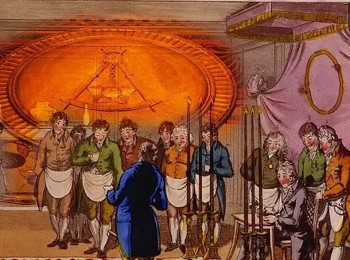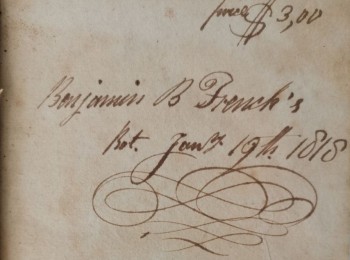
The article is devoted to an analysis of the life and multifaceted activity of Benjamin Brown French (1800—1870) — an American politician, civil servant, Clerk of the United States House of Representatives, and one of the most influential figures of nineteenth-century American Freemasonry. Particular attention is paid to his role in the history of the American Order of Knights Templar, in which he held the highest office of Grand Master of the Grand Encampment of Knights Templar of the United States during the difficult period of the American Civil War.
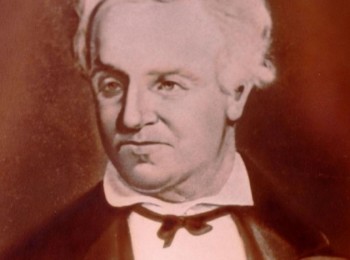
This article examines the missionary activity of Sir Knight Samuel May Williams (1795—1858), the first Knight Templar of Texas. Having been received into the Masonic Order of Knights Templar on December 1, 1835, Samuel M. Williams devoted the remainder of his life to service within the Order. In the conclusion, the author argues that the activity of Samuel M. Williams represents a rare example of the combination of political, civic, and Masonic missions that exerted a long-term influence on the development of Texas.
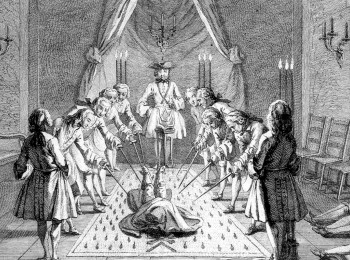
The manuscript is devoted to the study of the structure of Masonic organizations in the Russian Empire in the XVIII century. The material of the work includes memoir sources, published documents (interrogation materials), as well as pre-revolutionary, foreign and modern historiography. The research is based on such methods of historical research as historical-systematic, classification, synthesis and content analysis. In conclusion, the authors note that the structure of Russian Freemasonry of the XVIII century included three types of Masonic lodges: — The «English» system of Masonic lodges.