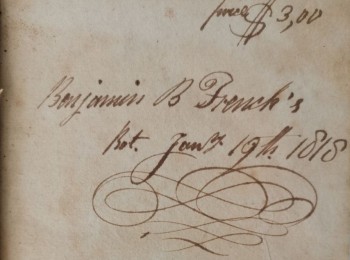
The article is devoted to an analysis of the life and multifaceted activity of Benjamin Brown French (1800—1870) — an American politician, civil servant, Clerk of the United States House of Representatives, and one of the most influential figures of nineteenth-century American Freemasonry. Particular attention is paid to his role in the history of the American Order of Knights Templar, in which he held the highest office of Grand Master of the Grand Encampment of Knights Templar of the United States during the difficult period of the American Civil War.
This study examines the personal composition of one of the early Knights Templar organizations in the United States—Winchester Grand Encampment—as of 1821, when its membership consisted of 31 individuals.
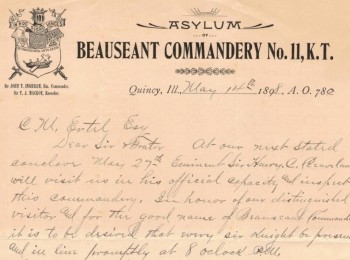
The present study examines the history of Beauseant Commandery No. 11, a Masonic body of the Knights Templar located in Quincy, Illinois. The research is based on the annual Proceedings of the Grand Commandery of Knights Templar of the State of Illinois for the period 1861—1911. In the conclusion, the author emphasizes that Beauseant Commandery No. 11 operated in Quincy for fifty years, from 1861 to 1911.
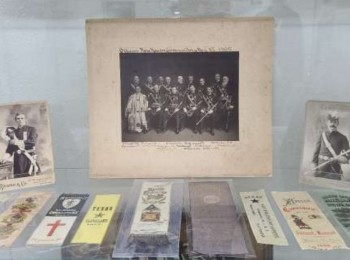
This work examines the emergence and evolution of ribbons in the American Masonic order of Knights Templar in the second half of the 19th century. The study’s source base incorporates a collection of ribbons at Cherkas Global University’s Museum of the History of the American Knights Templar.