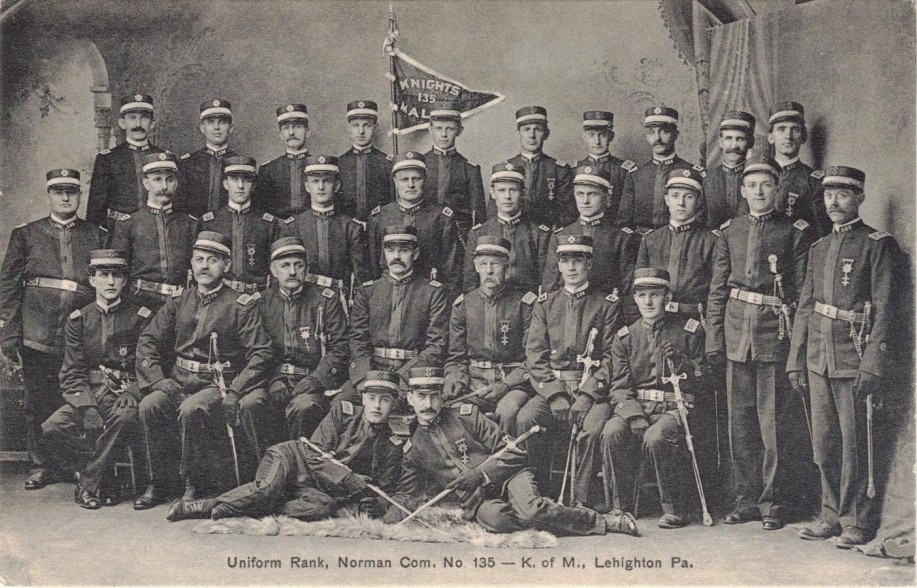
This article examines the uniform of the American Knights of Malta in the early twentieth century, using Norman Commandery No. 135 (Lehighton, Pennsylvania) as a case study. The research is based on the analysis of museum artifacts from the collections of The Museum of the History of the American Knights Templar (Houston, USA), as well as a visual examination of photographic materials that make it possible to reconstruct the appearance of the commandery. The study demonstrates that the Knights of Malta uniform constituted a coherent and highly standardized system, including headgear, coats, shoulder straps, insignia, belt plates, and ceremonial swords. Particular attention is given to the distinctions between senior (officer) and junior ranks, which were primarily expressed through the symbolism of crosses (patriarchal and passion crosses), as well as through differences in weapon design and certain elements of dress. It is shown that, despite the overall unity of style, the uniform combined elements of hierarchical differentiation with a tendency toward standardization, reflecting the internal organization of the commandery. The analysis also highlights the important role of symbolism (crosses, monograms, colors) as a means of expressing affiliation with the order and its structural units. The study concludes that the Knights of Malta uniform represents an important source for the study of Masonic material culture, offering deeper insight into the corporate identity and visual representation of fraternal organizations in the early twentieth century.
Source: Mamadaliev, Anvar M. (2026). Uniform of the American Knights of Malta: The Case of Norman Commandery No. 135, Lehighton, Pennsylvania (Early 20th Century). Recorder. 2(2): 190-201.
Source web-site: https://easteuropeanhistory.org/journals_n/1775697588.pdf
Number of views: 7