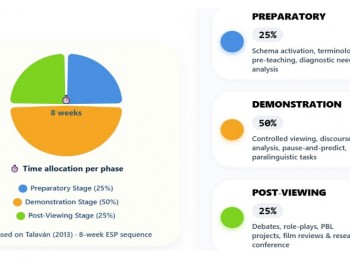
This study integrates media education into English for Specific Purposes (ESP) acquisition by examining feature films' methodological potential for developing media literacy. Using One Flew Over the Cuckoo's Nest (Forman, 1975) as a multimodal case study, the research proposes a threephase pedagogical framework — preparatory, demonstration, post-viewing — to optimise film-based language acquisition and critical media analysis.
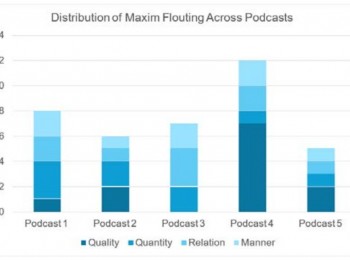
The study examines how Grice's Cooperative Principle and conversational maxims operate in authentic spoken discourse, focusing on five educational podcasts published on the platform Spotify between the years 2024 and 2025. Drawing on pragmatic theory — including conversational implicature and Relevance Theory — it is investigated how and why speakers flout the Quality, Quantity, Relation, and Manner maxims in real-life communication.
In the contemporary world, where interactions, mobilisations and opinions are deeply influenced by digital media, civic participation remains uneven, even among journalists who are deeply engaged in the digital spaces.
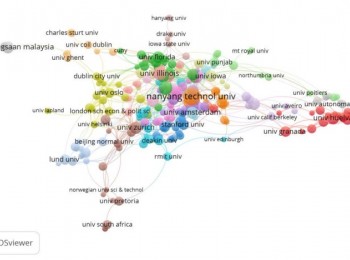
Media and Information Literacy (MIL) has become a vital educational priority in the digital age, equipping learners with critical competencies to navigate complex media environments, combat misinformation, and engage responsibly with digital technologies.
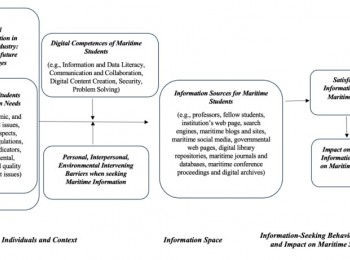
This study investigates the connection between information seeking behavior and digital literacy among maritime university students. Despite the recognized importance of digital competencies, empirical research in specialized academic fields remains limited.
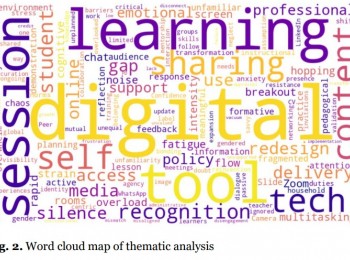
As digital technologies continue to reshape professional development in higher education, online academic conferences have emerged as accessible spaces where university teachers engage with new pedagogies, digital tools, and professional networks.
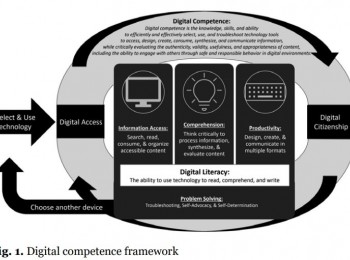
Visually impaired students (VIS) face challenges in developing media and digital literacies, which are essential for academic success, personal independence, and social participation. This review article synthesises theoretical and empirical research on these challenges and corresponding solutions within higher education.
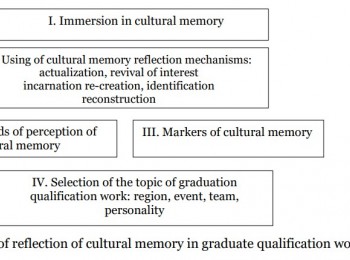
This study found that the protection of the features and mechanisms of reflecting the students regional cultural memory in documentary films is a means of developing creativity in media education and video creation. In this investigation, our attention is drawn to the theme of copyright films about regional cultural heritage and the typology of documentary films about its cultural memory.
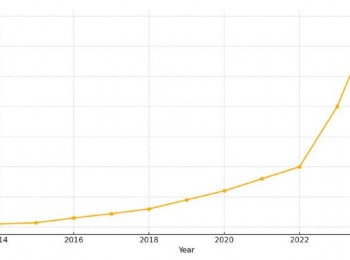
Since 2022 in the New Reality, for India and Russia, the innovative strategy of country interactions in all spheres becomes a significant research problem. Сreative industries as a dual cultural-economic phenomenon is seem as a relevant research subject.
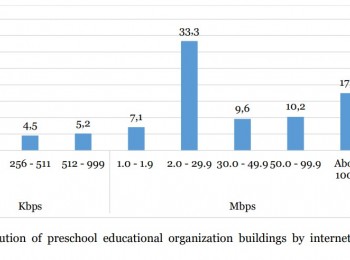
Advances in digital technology are rapidly transforming education. The primary instrument for implementing digitalization measures for general education in Russia until 2025 was the federal project «Digital Educational Environment» under the National Project «Education».