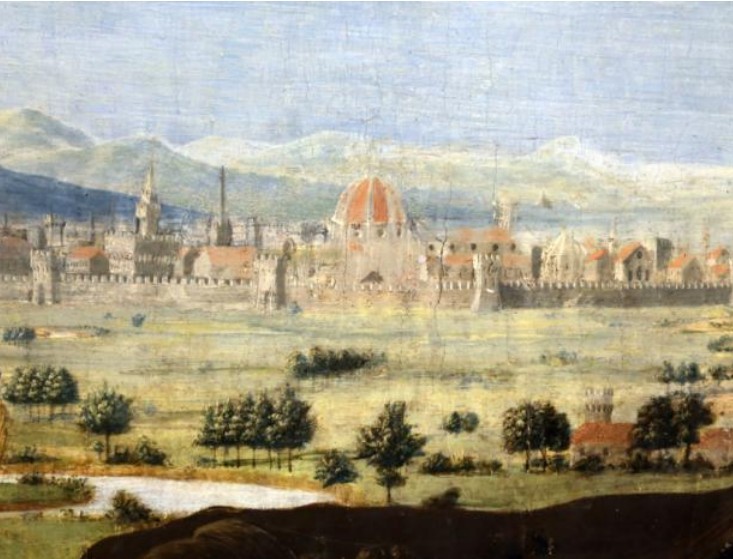
Despite the interest of scholars, the legalization of slavery in the city-republics of Late Medieval Italy remains largely unexplored. The wealth of source material that Italian archivists and historians (S. Bongi, A. Zanelli) began collecting and presenting in their works as early as the 19th century can serve as a solid foundation for specialized historical research on this topic. Therefore, this article attempts to analyze the legalization of slavery and the legal status of slaves using Italian cities (Venice, Lucca, Florence, etc.) as examples. Particular attention is paid to the formation and operation of the “slave code” that emerged in Florence — a unique phenomenon of its era, largely based on the traditions of ancient Roman law. The article demonstrates that the legislation of Late Medieval Italy reflected the types of punishments for unlawful acts committed against slaves, a system of fines, and the rights and obligations of owners of movable property (slaves). The example of the cited decrees, especially the Florentine ones, shows that the slave was an object of law (i.e., the movable property of the slave owner) and therefore was protected by law.
Source: Kravtsova, Evgeniуa V. (2026). The Formation and Operation of the “Slave Code” in the Lands of Italy in the 14th–15th centuries. Slavery: Theory and Practice. 11(1): 3-10.
Source web-site: https://stp.cherkasgu.press/journals_n/1795428942.pdf
Number of views: 9