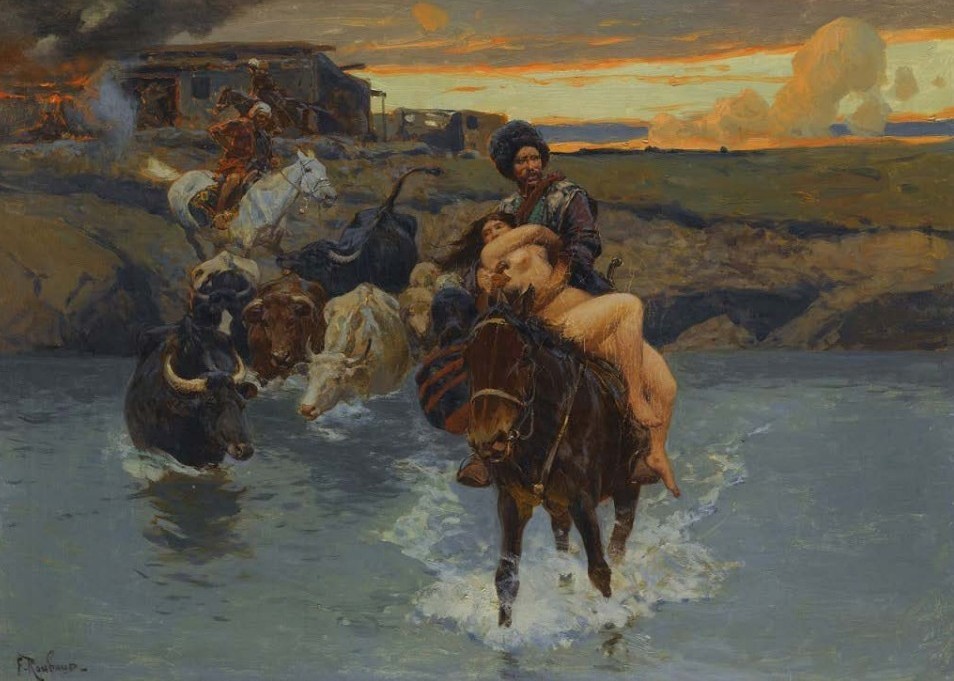
The article examines the state of slavery among the mountain peoples of the North-Western Caucasus during the period from the end of the Caucasian War to the beginning of the Russo-Turkish War of 1877—1878. Within the established chronology, the author analyzes such components of slavery as the slave trade, ransoming of prisoners, and the most important traditional component of the socio-economic life of the Circassian sub-ethnic groups and neighboring tribes — the class-based dependence of peasants (ogi, pshitli, unauts) — in the context of the integration of the Trans-Kuban region into the Russian state through the implementation of reforms. The successful implementation of administrative, land‑related, and estate-based reforms enabled approximately 16,500 mountain peasants in the Kuban Region to gain personal freedom and land allotments by the second half of the 1870s.
Source: Khodorov, Oleg I. (2026). The State of Slavery and Its Abolition among the Circassians (Adyghe) during the Period from the end of the Caucasian War to the beginning of the Russo-Turkish War of 1877–1878. Slavery: Theory and Practice. 11(1): 44-59.
Source web-site: https://stp.cherkasgu.press/journals_n/1795343884.pdf
Number of views: 11