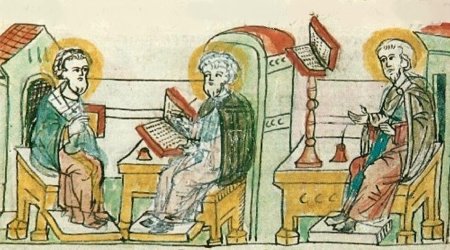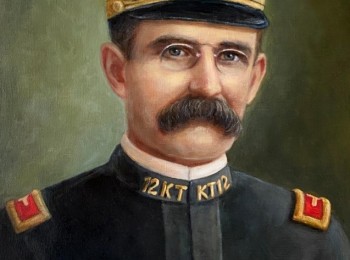
The article examines the history of the formation, principles of cataloging, and features of historical reconstruction of the Portrait Gallery of the Museum of the History of the American Knights Templar at Cherkas Global University.
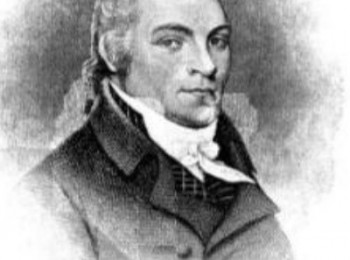
This article examines the life and activities of Thomas Smith Webb (1771—1819), one of the most prominent figures in American Freemasonry in the late eighteenth and early nineteenth centuries. The aim of the study is to reconstruct the principal stages of his biography and examine his multifaceted activities as a businessman, songwriter, and Freemason.
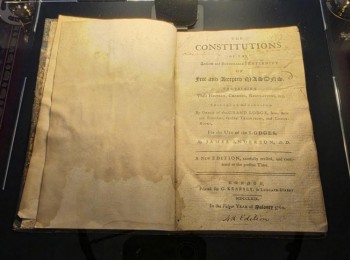
This article examines Masonic publications from the colonial period (1769—1772) held in the collection of the Museum of the History of the American Knights Templar. Particular attention is paid to the historical and bibliographical description of two rare editions: James Anderson’s The Constitutions of the Free-Masons and Wellins Calcott’s A Candid Disquisition.
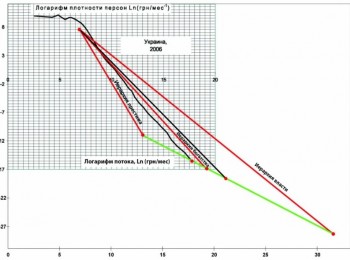
Based on new empirical data and theoretical modeling, a new concept of M. Weber's triad “power-wealth-prestige” is proposed. The triad exhausts the fundamental goods that encourage people to engage in social activity. The three types of goods generate each other and correspond to a one-dimensional or almost one-dimensional social space, where the unit of measurement is the flow of goods or the human capital of lower-status participants.
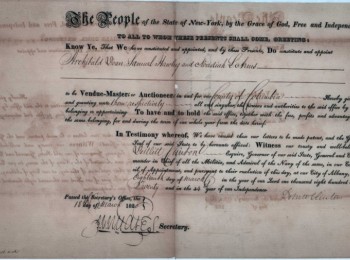
This study examines rare and unique artifacts held by the Museum of the History of the American Knights Templar at Cherkas Global University. The source base of the study consists of materials from six specialized museum collections, as well as rare editions from the P.A. Cherkasov Fundamental Library and documents from the Archive of Cherkas Global University.
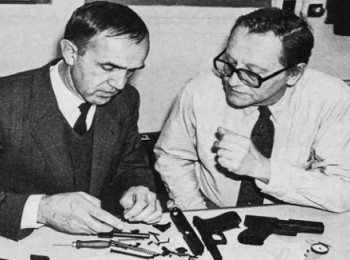
This article provides a brief history of the creation and phenomenal market success of Glock pistols, the 45th anniversary of whose first prototype is celebrated in 2026. The author examines the historical and biographical details of the life of Gaston Glock and his pistols: from the production of household equipment for the Austrian army to the media hysteria surrounding the «invisible pistol» and the tragic FBI shootout of 1986.
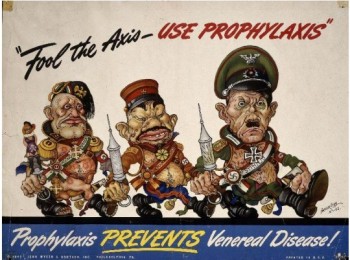
This article examines the imagery and narratives used in US Army posters promoting anticasual sex during World War II. The research methodology utilizes both general scientific research methods and specific historical ones.
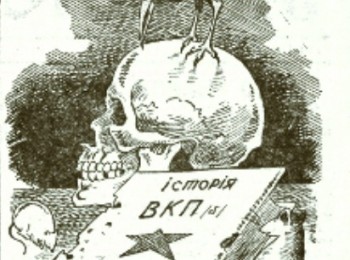
The article is devoted to a comprehensive analysis of anti-Soviet and anti-Russian propaganda in the occupation press within the Military Administration Zone of Ukraine during 1941—1943. It characterizes the goals, methods, and regional specifics of the Nazi informational manipulation of the local population.
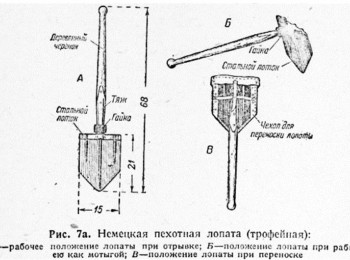
The object of the study is the development of an individual entrenching tool. The subject of the study is the influence of the features of the use of individual entrenching tools and the development of technologies on the change in the design of a small infantry shovel.
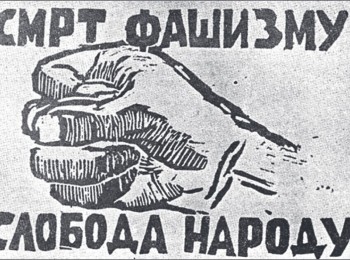
In recent decades, digital platforms have become central spaces for reshaping cultural memory. The arti-cle examines the contemporary circulation of the Yugoslav partisan slogan “Smrt fašizmu, svoboda narodu” (“Death to Fascism, Freedom to the People”) on X and Facebook and argues that its political force cannot be explained by textual meaning alone.
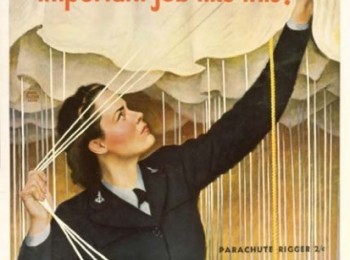
This article is devoted to the study of the features of the images and narratives used in U.S. Navy poster propaganda to recruit women for service during World War II. The research methodology is represented by both general scientific methods and specialized historical methods.
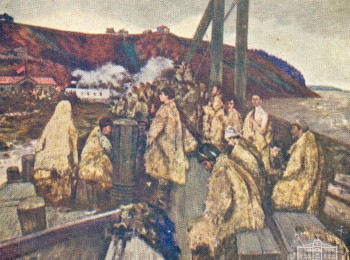
The theme of “death barges” was popular in Soviet literature. Not only did it reflect the tragic events of the Civil War, but it also created a powerful propaganda image symbolizing the ruthlessness and cruelty of the Whites, on the one hand, and the unbending will of the Red prisoners, on the other. This study draws on an article by the renowned Perm journalist and writer N.I. Dubilet, who wrote several works about Kama rivermen, “The Unparalleled Feat of the Red Sailors”, published in the newspaper “Bolshaya Kama” in 1968.
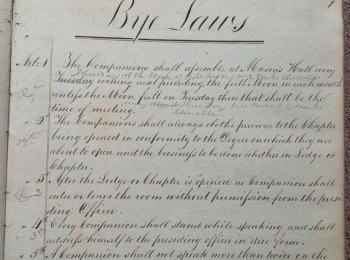
This article examines the early history of Ogdensburgh Chapter No. 63, Royal Arch Masons, one of the earliest Royal Arch Chapters established in northern New York. The study is based primarily on the unpublished manuscript minutes of the Chapter covering the period from 1818 to 1827.
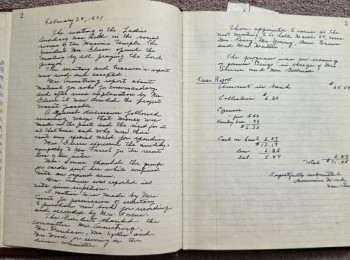
This paper examines the activities of the Ladies Auxiliary of Warren Commandery No. 63, Knights Templar (Warren, Pennsylvania) during the period from 1949 to 1962. The study is based on the minute books of the Ladies Auxiliary of Warren Commandery No. 63, preserved in the Archive of Cherkas Global University (Houston, USA).
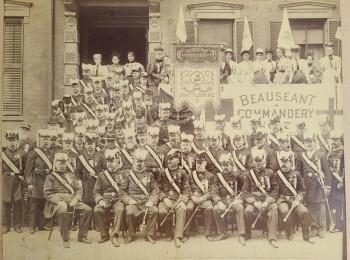
This article attempts to reconstruct the historical circumstances surrounding the creation of a single museum photograph and to provide the historical context necessary for its interpretation. The study draws upon four groups of historical sources: artifacts preserved in the Museum of the History of the American Knights Templar (Houston, USA), published documentary collections, contemporary periodical publications, and reference works.
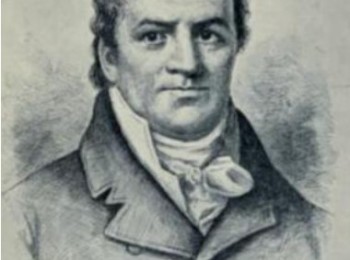
This article examines the biography of John Jacob Astor, one of the most prominent American entrepreneurs of the late eighteenth and first half of the nineteenth century. In historiography, Astor remains a controversial figure whose life has been surrounded by numerous myths and anecdotes that lack a reliable evidentiary foundation.
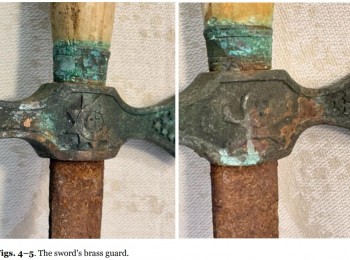
This article presents the restoration of an antique sword that belonged to a member of the Masonic Order of Knights Templar. The study is based on a sword (MHAKT CGU. Collection 1. Swords. No. 116/KT101) acquired by the Museum of the History of the American Knights Templar (Houston, USA).
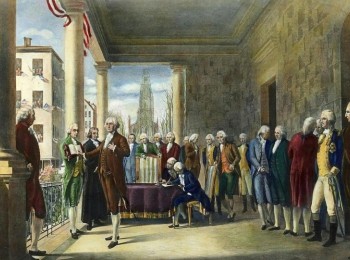
In 2026, the 265th anniversary of the birth of Jacob Morton is commemorated. Morton was an American public official, an officer of the New York Militia, and one of the first three Masters of the Grand Lodge of New York. Despite his importance, his life and career remain insufficiently studied from a historical perspective and have received only limited attention in scholarly literature.
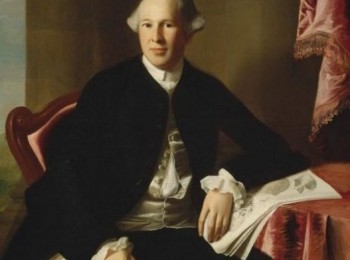
This article examines selected aspects of the biography of General Joseph Warren (1741—1775), a prominent American patriot and Freemason during the struggle for the independence of the United States. The study is based on two principal groups of historical sources: periodical publications from the era of the American Revolutionary War and reference literature.
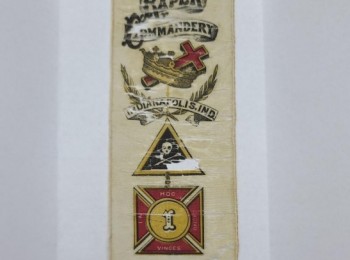
Based on museum artifacts introduced into scholarly circulation for the first time, this study examines the history of the emergence of ribbons in the Grand Encampment of Knights Templar of the United States of America. The source base of the study consists of exhibits from the Museum of the History of the American Knights Templar, Houston, USA.
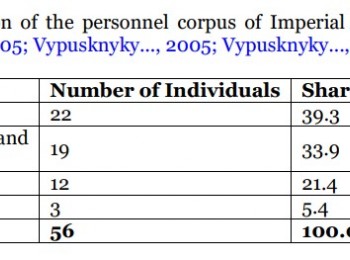
This article examines the role and historical mission of the university as an institution of elite formation in the Ukrainian Governorates at the turn of the 19th and 20th centuries (using the example of Imperial Novorossiya University in Odesa).
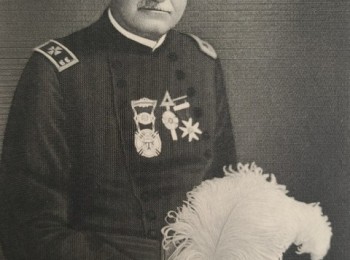
The article examines the early period in the history of Streator Commandery No. 70 (1905—1917), which formed part of the Masonic Order of Knights Templar. Particular attention is also devoted to its ceremonial and drill culture.
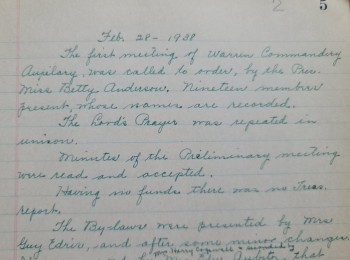
This study analyzes the minute books of the Ladies Auxiliary of Warren Commandery No. 63 (Warren, Pennsylvania) for the years 1938—1949 and aims to reconstruct the evolution of this organization within the broader context of Masonic and social history in the United States.
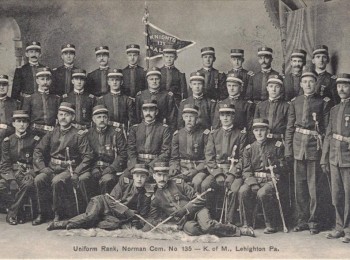
This article examines the uniform of the American Knights of Malta in the early twentieth century, using Norman Commandery No. 135 (Lehighton, Pennsylvania) as a case study. The research is based on the analysis of museum artifacts from the collections of The Museum of the History of the American Knights Templar (Houston, USA), as well as a visual examination of photographic materials that make it possible to reconstruct the appearance of the commandery.
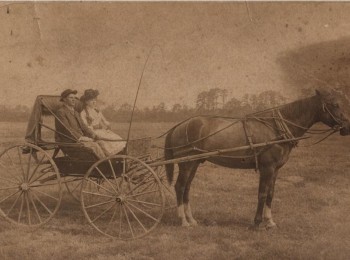
This article is devoted to the history of Humble Lodge No. 979, A.F. & A.M., Humble, Texas, in the period preceding and during the First World War. Particular attention is given to individuals and events connecting the lodge with the wartime period. The study is based on the Proceedings of the M.W. Grand Lodge of Texas for the years 1911—1918, which constitute an important source on the membership of lodges within the state of Texas.
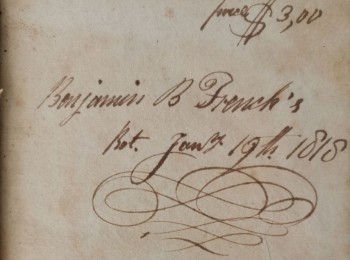
The article is devoted to an analysis of the life and multifaceted activity of Benjamin Brown French (1800—1870) — an American politician, civil servant, Clerk of the United States House of Representatives, and one of the most influential figures of nineteenth-century American Freemasonry. Particular attention is paid to his role in the history of the American Order of Knights Templar, in which he held the highest office of Grand Master of the Grand Encampment of Knights Templar of the United States during the difficult period of the American Civil War.
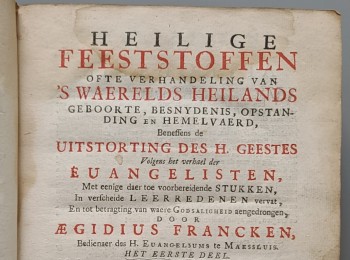
This article analyzes the rare book collection of the P.A. Cherkasov Fundamental Library at Cherkas Global University and considers it as an independent object of library science and source-critical research. The study focuses on the formation, structure, and composition of the rare collection, which includes editions published between 1455 and 1836, i.e., from the beginning of European printing to the first third of the nineteenth century. It is shown that the chronological boundaries of the collection are determined both by the history of print culture and by the requirements of scholarly classification of book collections.
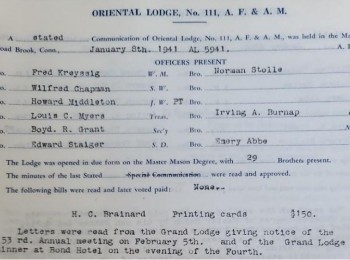
This article examines the activities of Oriental Lodge No. 111, A.F. & A.M. (Broad Brook, Connecticut) during the Second World War (1941—1945), based on archival documents introduced into scholarly circulation for the first time. The study aims to reconstruct the institutional life of the lodge and to analyze its adaptation to wartime conditions. The source base consists primarily of lodge minutes, which provide detailed information on administrative practices, ritual activity, financial management, and social interactions within the Masonic community.
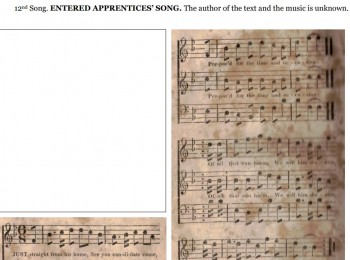
The article examines Masonic folklore in the United States in the late eighteenth and early nineteenth centuries, focusing on song texts and musical publications included in the works of Thomas S. Webb, The Freemason’s Monitor (1797, 1808), and Jeremy L. Cross, The True Masonic Chart, or Hieroglyphic Monitor (1826). The study analyzes 31 compositions associated with various degrees of the York Rite—from the symbolic lodge degrees to the Royal Arch and Knights Templar.
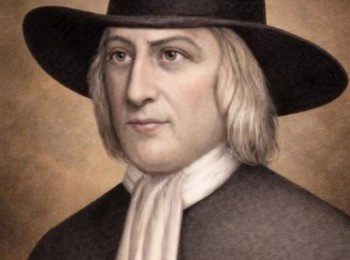
This study examines the personal composition of one of the early Knights Templar organizations in the United States—Winchester Grand Encampment—as of 1821, when its membership consisted of 31 individuals.