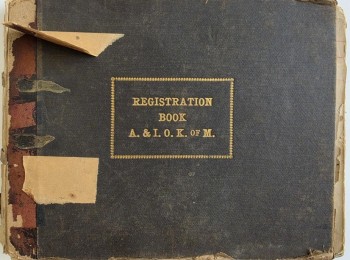
This paper introduces into scholarly circulation for the first time the archive of Edwin M. Stanton Commandery No. 523, Knights of Malta (Steubenville, Ohio), discovered in 2026 during the reconstruction of an abandoned house in Northern Virginia and subsequently transferred to the Archive of Cherkas Global University.
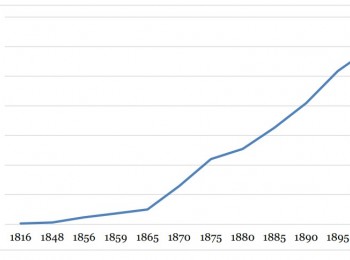
The paper examines the membership dynamics of the Grand Encampment of Knights Templar of the USA in 1816—1899. The aim of the study is to examine the quantitative development of American Masonic Templarism, identify the main stages of changes in the organization's membership, and reveal the characteristics of its growth during different historical periods.
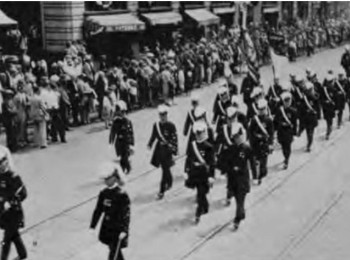
This article examines the history of Streator Commandery No. 70, Knights Templar (Streator, Illinois), from 1926 to 1929, on the eve of and during the initial phase of the Great Depression.
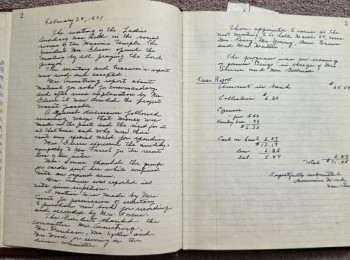
This paper examines the activities of the Ladies Auxiliary of Warren Commandery No. 63, Knights Templar (Warren, Pennsylvania) during the period from 1949 to 1962. The study is based on the minute books of the Ladies Auxiliary of Warren Commandery No. 63, preserved in the Archive of Cherkas Global University (Houston, USA).
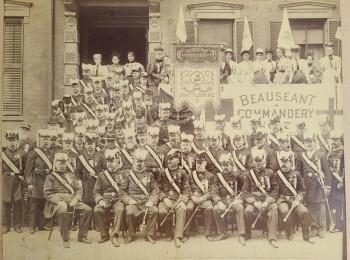
This article attempts to reconstruct the historical circumstances surrounding the creation of a single museum photograph and to provide the historical context necessary for its interpretation. The study draws upon four groups of historical sources: artifacts preserved in the Museum of the History of the American Knights Templar (Houston, USA), published documentary collections, contemporary periodical publications, and reference works.
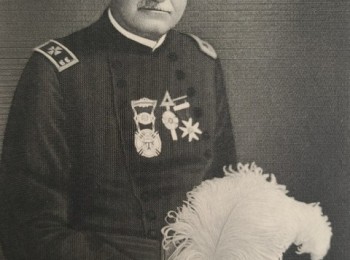
The article examines the early period in the history of Streator Commandery No. 70 (1905—1917), which formed part of the Masonic Order of Knights Templar. Particular attention is also devoted to its ceremonial and drill culture.
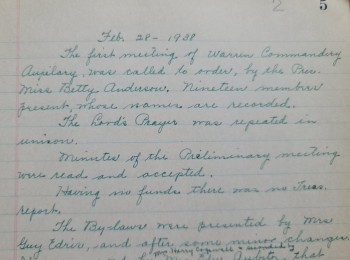
This study analyzes the minute books of the Ladies Auxiliary of Warren Commandery No. 63 (Warren, Pennsylvania) for the years 1938—1949 and aims to reconstruct the evolution of this organization within the broader context of Masonic and social history in the United States.
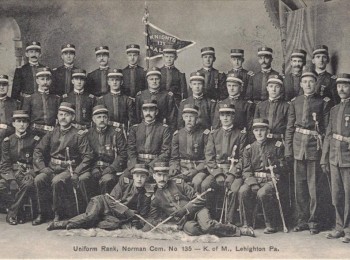
This article examines the uniform of the American Knights of Malta in the early twentieth century, using Norman Commandery No. 135 (Lehighton, Pennsylvania) as a case study. The research is based on the analysis of museum artifacts from the collections of The Museum of the History of the American Knights Templar (Houston, USA), as well as a visual examination of photographic materials that make it possible to reconstruct the appearance of the commandery.
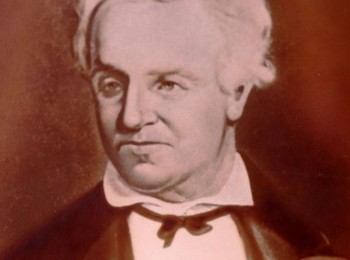
This article examines the missionary activity of Sir Knight Samuel May Williams (1795—1858), the first Knight Templar of Texas. Having been received into the Masonic Order of Knights Templar on December 1, 1835, Samuel M. Williams devoted the remainder of his life to service within the Order. In the conclusion, the author argues that the activity of Samuel M. Williams represents a rare example of the combination of political, civic, and Masonic missions that exerted a long-term influence on the development of Texas.
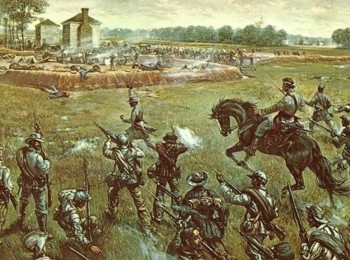
This work represents a biography of Benjamin F. Howard (1835—1908) as a soldier, police officer, and Mason. It reveals little-known aspects of his life. The work leaned on five groups of historical sources — (1) archival documents, (2) museum items, (3) collections of published documents, (4) sources of private origin, and (5) periodical press materials.
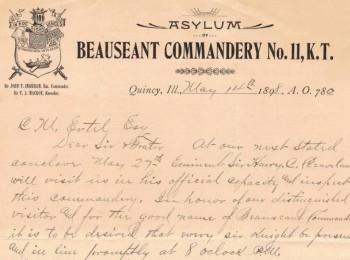
The present study examines the history of Beauseant Commandery No. 11, a Masonic body of the Knights Templar located in Quincy, Illinois. The research is based on the annual Proceedings of the Grand Commandery of Knights Templar of the State of Illinois for the period 1861—1911. In the conclusion, the author emphasizes that Beauseant Commandery No. 11 operated in Quincy for fifty years, from 1861 to 1911.

Yakov Gerasimovich Kukharenko

Military art of Petro Kalnyshevsky

Causes of the Defeat of the Red Army

The Knight of Teutonic Order Heinrich von Plotzke